
About the CFCE
The work of the Commission
The CFCE was established in accordance with the Care of Cathedrals Measure ("the Measure"). First established in 1990, the Measure was updated and consolidated in 2011, and it is this 2011 Measure under which the Commission currently operates; it is complemented by the 2006 Care of Cathedrals Rules (as amended in 2020). The Measure provides a special planning system for Church of England cathedrals in England under the Ecclesiastical Exemption from listed building control; this is comparable to, but separate from, the faculty system for churches.
In 2019 we published A User’s Guide to the Care of Cathedrals Measure, which explains legal requirements and good practice for making an application under the Measure. This is one of a number of guidance documents produced by the Cathedral and Church Buildings Division on a wide range of topics including contested heritage, adaptation to net-zero carbon, and the disposal of liturgical furnishings, all are available on our website. (N.B. The Care of Cathedrals Measure is not to be confused with the Cathedrals Measure 2021, which lays out governance and organisational issues for cathedrals. The Cathedrals Measure does not bear directly upon the work of the Commission but can be consulted here.)
In broad terms, the Measure means that works which a cathedral Chapter proposes to carry out are subject to external approval, if that work would materially affect the architectural, archaeological, artistic or historic character of the cathedral church or its contents, or affect the setting of the cathedral, or archaeological or human remains in or under the cathedral or its precinct. Approval is also required for the sale, loan, disposal or work to any object of interest in the ownership, possession or custody of the cathedral Chapter (in this respect, the Measure goes further than would secular listed building consent). Notification procedures offer the local planning authority, the national amenity societies and Historic England and members of the public the opportunity to comment before the application is determined.
Approval of applications made under the Measure must be given by one of two bodies: by the Commission centrally, or by a Fabric Advisory Committee (FAC) locally. The Commission and FACs are independent statutory bodies. They have two main duties: to help ensure that the Church of England’s cathedrals are cared for and conserved to the highest possible standards, so that public confidence is maintained in the Church’s responsible stewardship of these buildings, which have a pre-eminent place in the nation’s heritage and identity; and to support each cathedral in its role as the seat of the diocesan bishop and as a centre of Christian worship and mission.
The Commission is the national decision-making and advisory body on changes to cathedrals, their settings, and their contents. Each cathedral also has its own FAC which – despite the name – is both an advisory and decision-making body for some matters under the Measure. The Commission appoints half the members of each FAC, with the relevant cathedral chapter appointing the other half (each body consults the other prior to making their appointments). The specific classes of proposal reserved for determination by the Commission are those involving permanent alterations to or demolition of the fabric, or disturbance or destruction of archaeological or human remains; and those for the sale, loan, disposal or work of any object of outstanding special interest. The Commission may also exercise a power to call-in any application to an FAC which, in its view, gives rise to special considerations, though in practice it has done so only rarely.
The Commission’s other functions include giving advice on the care, conservation, repair and development of cathedrals, and the landscape and environment in which they are situated; and participating in educational and research projects in these areas.
It also has a responsibility to promote co-operation with other national conservation organisations. In its advisory role the Commission is committed to pursuing the highest standards in conservation, while it is also keen to promote the best and most imaginative in contemporary art and design. New and creative works of art, where they respond to the historic character of the building, can add greatly to the spiritual meaning and enjoyment of cathedrals. Giving advice on developing proposals from an early stage means that issues can be identified well in advance of an application being made, with the result that most applications made to the Commission tend to be approved.
Membership of the Commission

The CFCE has twenty-four members. Five are elected by the General Synod and the others are appointed by the Archbishops of Canterbury and York after due consultation or nomination by relevant groups such as the House of Bishops, Historic England and the Royal School of Church Music.
The Secretariat
The key responsibilities of the CFCE Secretariat include:
- Organising and running CFCE meetings
- Arranging, attending and writing up site visits
- Working with the Chair and Vice Chair to ensure policy and guidance matters affecting cathedrals are prioritised and attended to
- Organising and running expert CFCE committees
- Maintaining close links with each cathedral and its FAC and other stakeholder groups such as the Association of English Cathedrals, the Cathedral Architects Association, Historic England, the national amenity societies, etc.
The Secretariat of the Commission, the staff supporting the Church Buildings Council, and other officers covering policy, fundraising/development and special projects, together comprise the Cathedral and Church Buildings Department of the Church Commissioners.
CFCE Meetings
There are typically seven CFCE meetings a year. Dates are planned well in advance and it is expected that CFCE members attend all meetings unless extraordinary circumstances dictate otherwise.
Meetings usually start at 12pm and finish by 4pm, and are in-person. Meetings are typically held at Church House in Westminster; a sandwich lunch is provided, and Wi-Fi is available in the meeting room. Meeting room availability means that occasionally CFCE meetings will take place in a London venue outside of Church House and, in October, an overnight meeting in a cathedral city. You will always be told details of meetings as far in advance as possible.
Site Visits

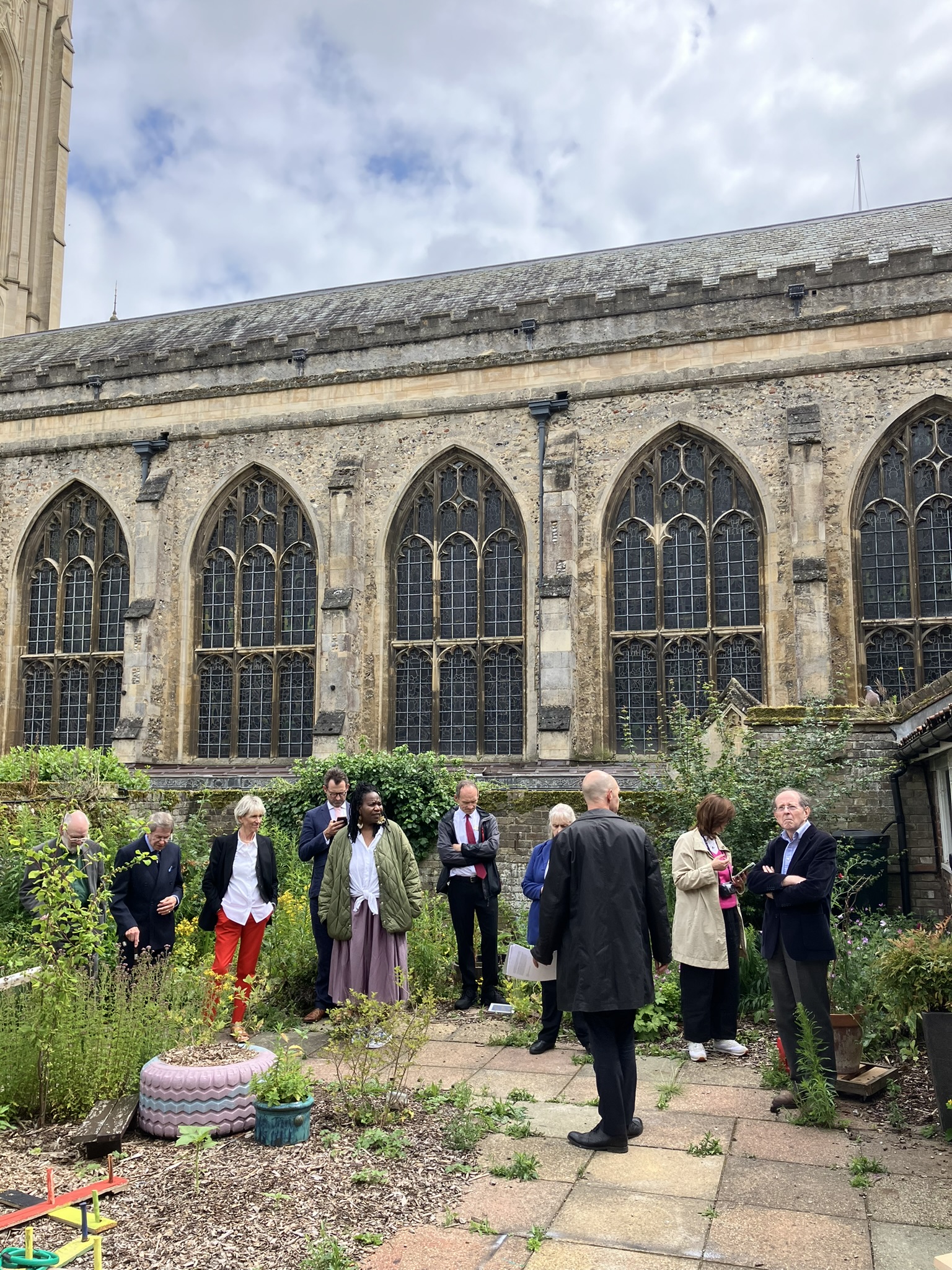
Site visits usually take place at advice stage or in advance of the Commission's determination of an application. Occasionally they take place after determination in order to advise on or discharge conditions of approval. A set of dates for potential site visits are released every year, and cathedrals are encouraged to use those wherever possible.
For all site visits a member of the CFCE Secretariat will attend, take notes and write up the visit afterwards. That report then comes to the following CFCE meeting for discussion before formal advice or determination is given. Expenses are paid for visits, but we ask you to arrange travel yourself as far in advance as possible to take advantage of cheaper fares.
For most visits we will specify the specialisms needed. Unless it is a very technical visit it is usually the case that ‘generalists’ would always be welcome as well. On occasion we have to limit the size of a visit so you may not be able to attend every visit you volunteer for.

Visits are a crucial part of the Commission’s work. We don’t do a visit for every piece of casework, but only for those which are novel, contentious, large, complex or a combination of these. For long-term projects we try to constitute groups of Commissioners who will consistently attend site visits. This is a useful way of getting to know both a cathedral and a project.
The secretariat and the cathedrals are aware that you are giving your time voluntarily and that you may not always be able to attend all the visits we advertise. We are grateful for the time you are able to give; however site visits do add an important dimension to the work of the Commission.